
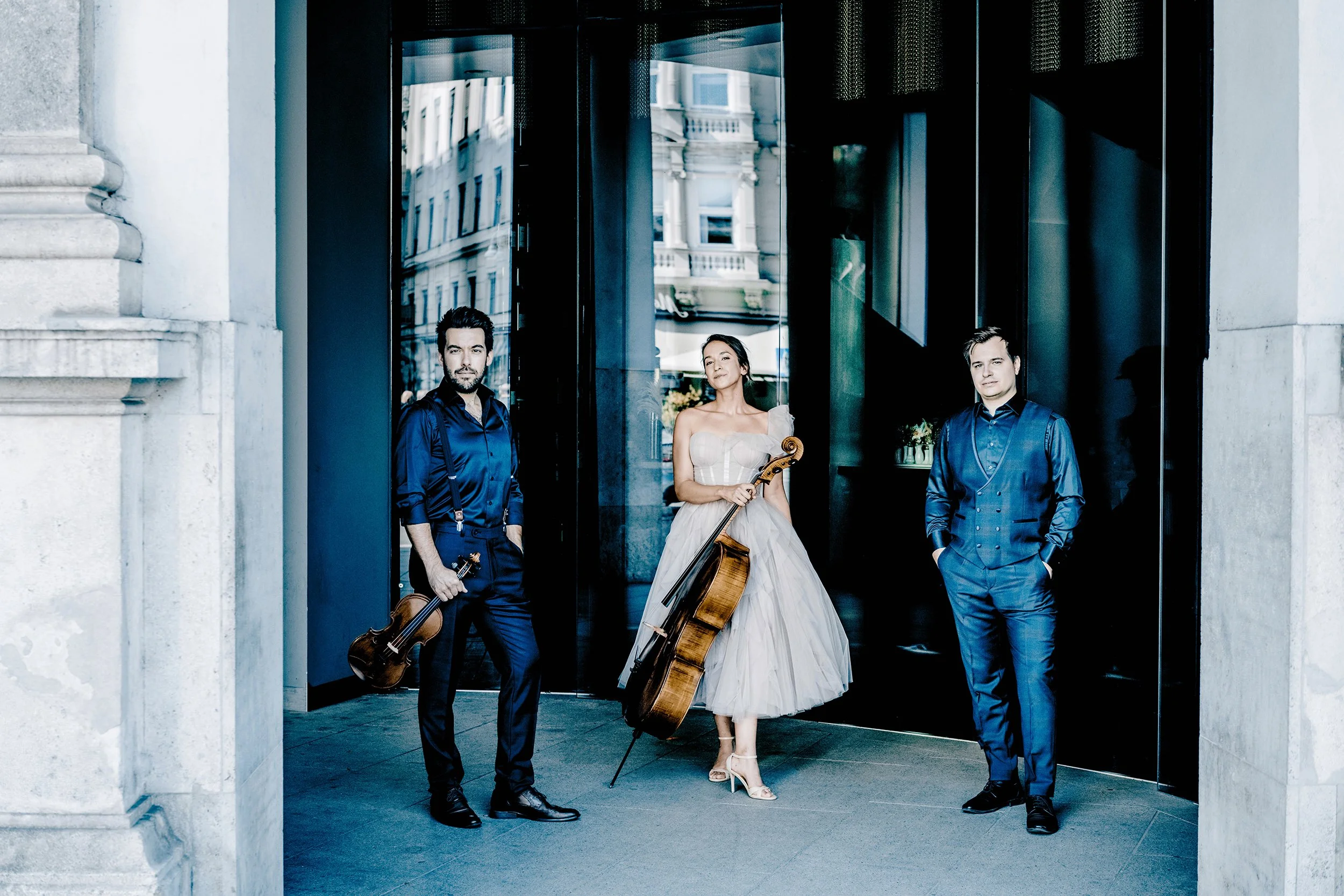
Trio Bohémo
Thursday, October 22, 7:30 PM
Joseph Haydn
Piano Trio No. 5 in G Minor, Hob.XV:1
Antonín Reicha
Piano Trio No. 1 in E-flat Major, Op. 101
Franz Schubert
Piano Trio No. 2 in E-flat Major, Op. 100
Illustrated talk by Ulrich Baer
Bohemian National Hall
321 E 73rd St, New York, NY 10021
The German eighteenth-century writer Johann Wolfgang von Goethe, sometimes considered the “German Shakespeare,” published The Sorrows of Young Werther in 1774, when he was only 24. The novel, about a tragic love affair, became a global sensation.
Over the next sixty years, Goethe distanced himself from this youthful outburst of passion in Werther, claiming with age to have learned to value moderation and formal control; Goethe published plays, novels, poetry, scientific writings, and served in senior government positions.
However, Goethe’s disavowal of Werther is suspicious. While he strove to cast his life as one of unending progress, in keeping with Enlightenment ideals, he fell deeply in love at age 73—calling into question his claim to have overcome the intoxicating irrationality of the human heart.
The three works we will hear—by Haydn, Reicha, and Schubert—each offer, in a sense, a new take on Werther’s sorrows and passion: Haydn through the discipline and balance of Classicism; Reicha through the experimentation and innovation of the emerging Romantic age; and Schubert through Romanticism’s profound sense of longing.
We may be tempted to hear them in succession as though each improves somewhat upon its predecessor. But art, like life, does not progress by simply building on what came before. Goethe’s heart gave the lie to both his disavowal of Werther and his claim to have outgrown passion; great art, too, returns anew each time to the fundamental questions of our lives.
No refunds or exchanges. Artists, programs, dates, and prices are subject to change.
If an event presented by Aspect Chamber Music Series is cancelled or postponed, we will announce the change by email and on ASPECTCHAMBERMUSIC.COM.
